-01.svg)
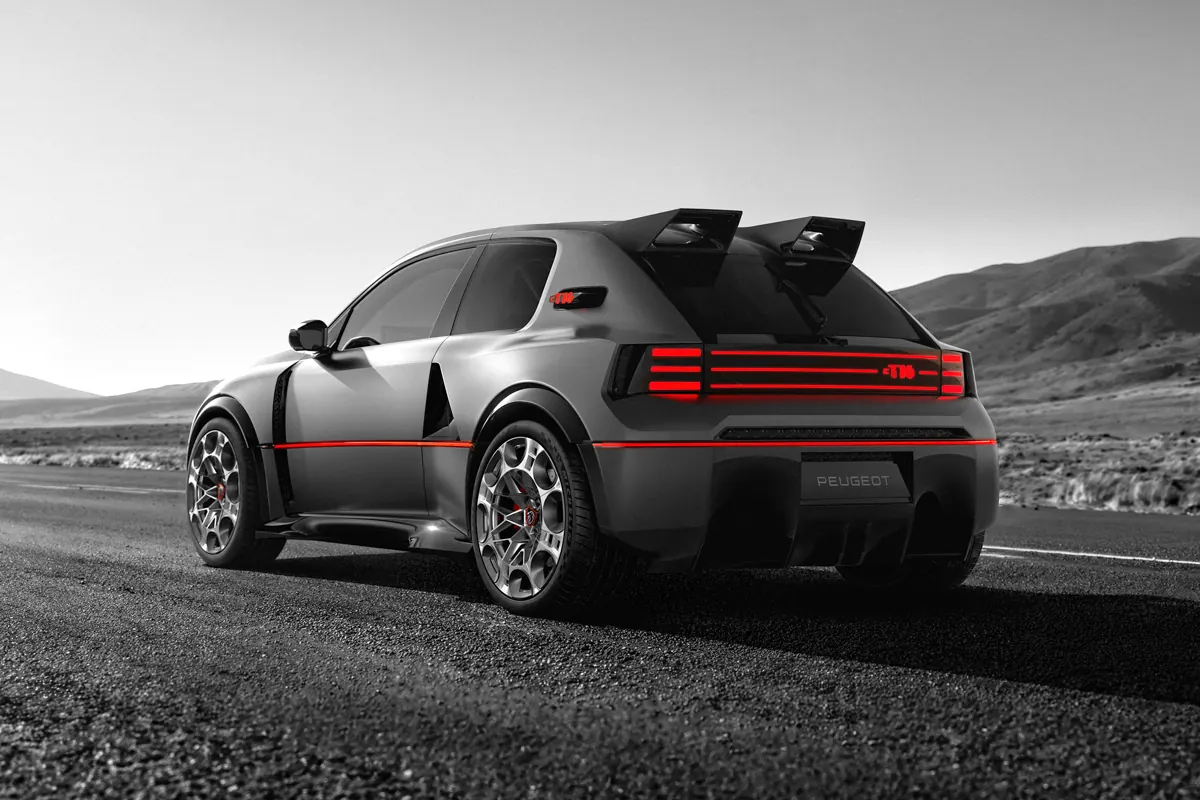
The E-T16 arrives in the 40th anniversary year of Peugeot’s back-to-back World Rally Championships. For something billed as a design showcase for the next-generation E-208, it has a suspicious amount of resolution. Beyond the headline specification – three electric motors, four-wheel drive and torque vectoring across the rear axle and between the axles – Peugeot proudly claims the concept car is capable of three laps of the Nürburgring Nordschleife in Performance mode without needing to curtail output.
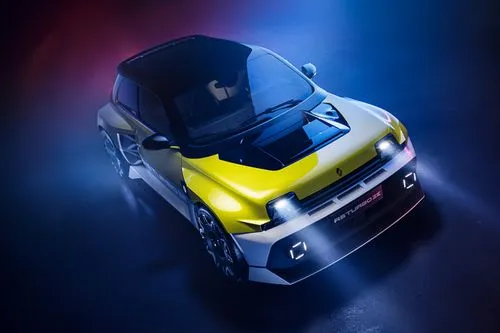
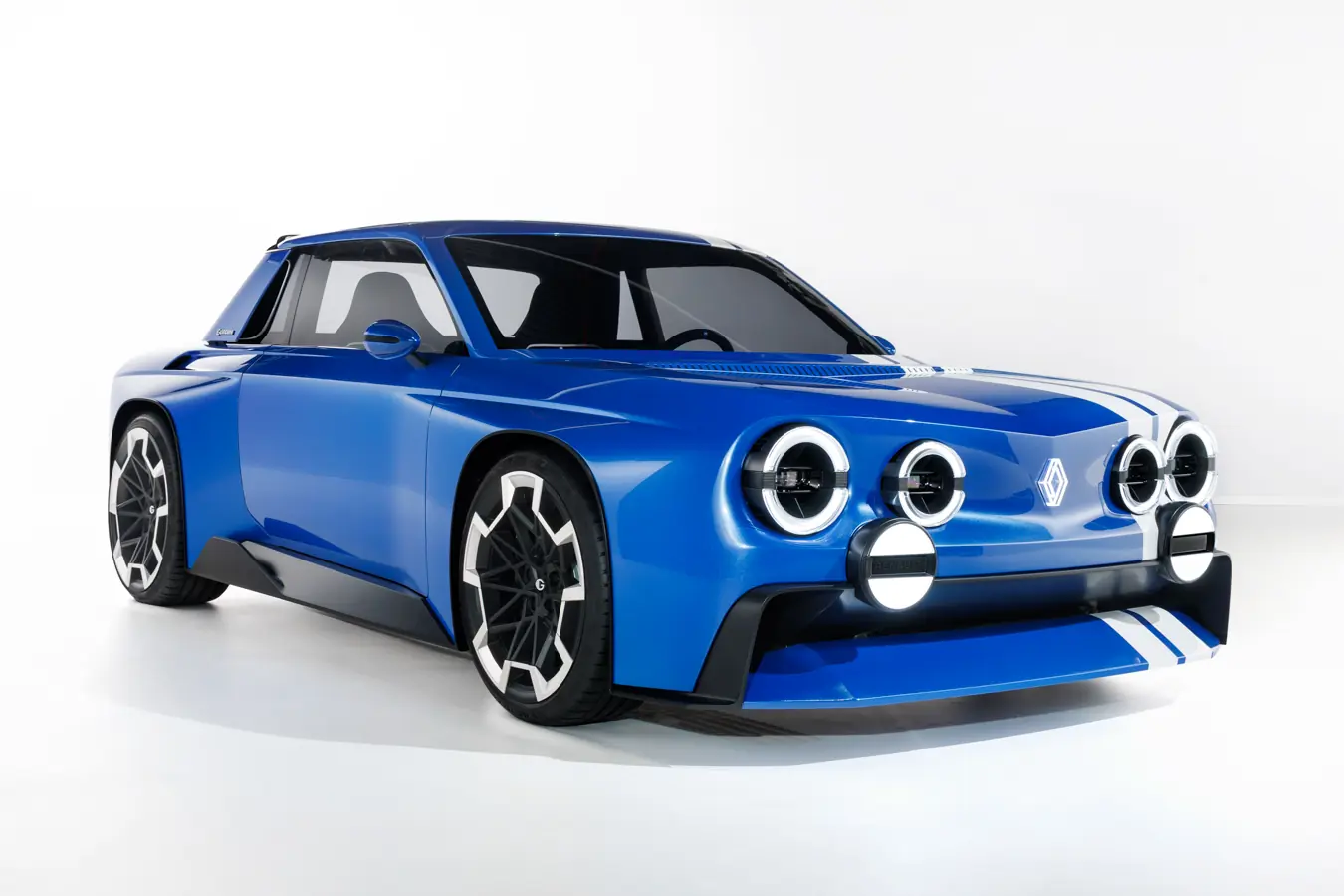
Comparison to Renault’s R5 Turbo 3E is impossible to ignore. Renault’s electric tribute to its mid-engined 5 Turbo Group B legend began as a one-off show car in 2022. Four years on, it has a conditional £135,000 asking price, a run of 1,980 numbered examples and deliveries due in 2027. Renault claims 0–62mph in 3.5sec from a combined 536bhp, produced by two in-wheel rear motors.
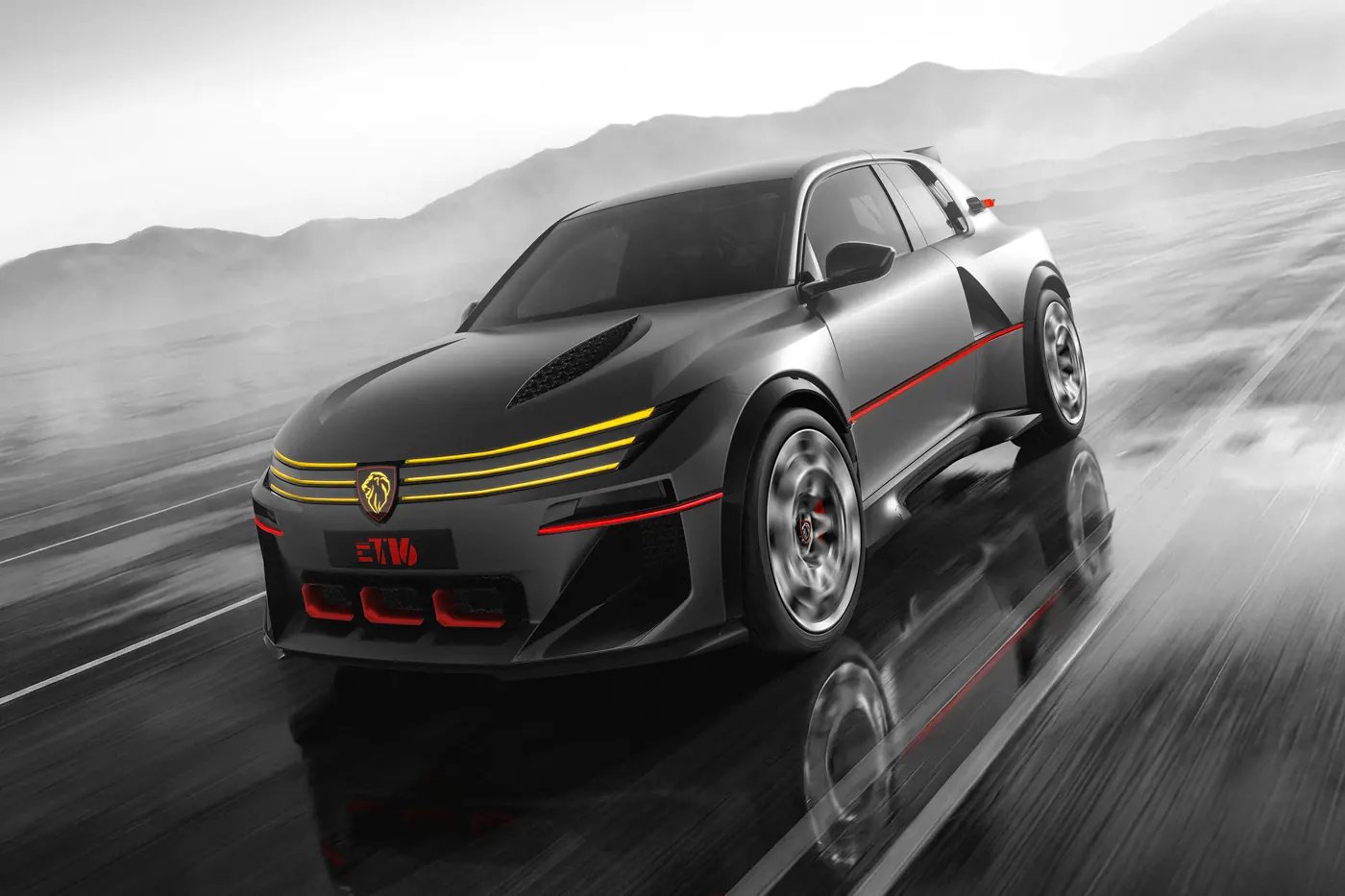
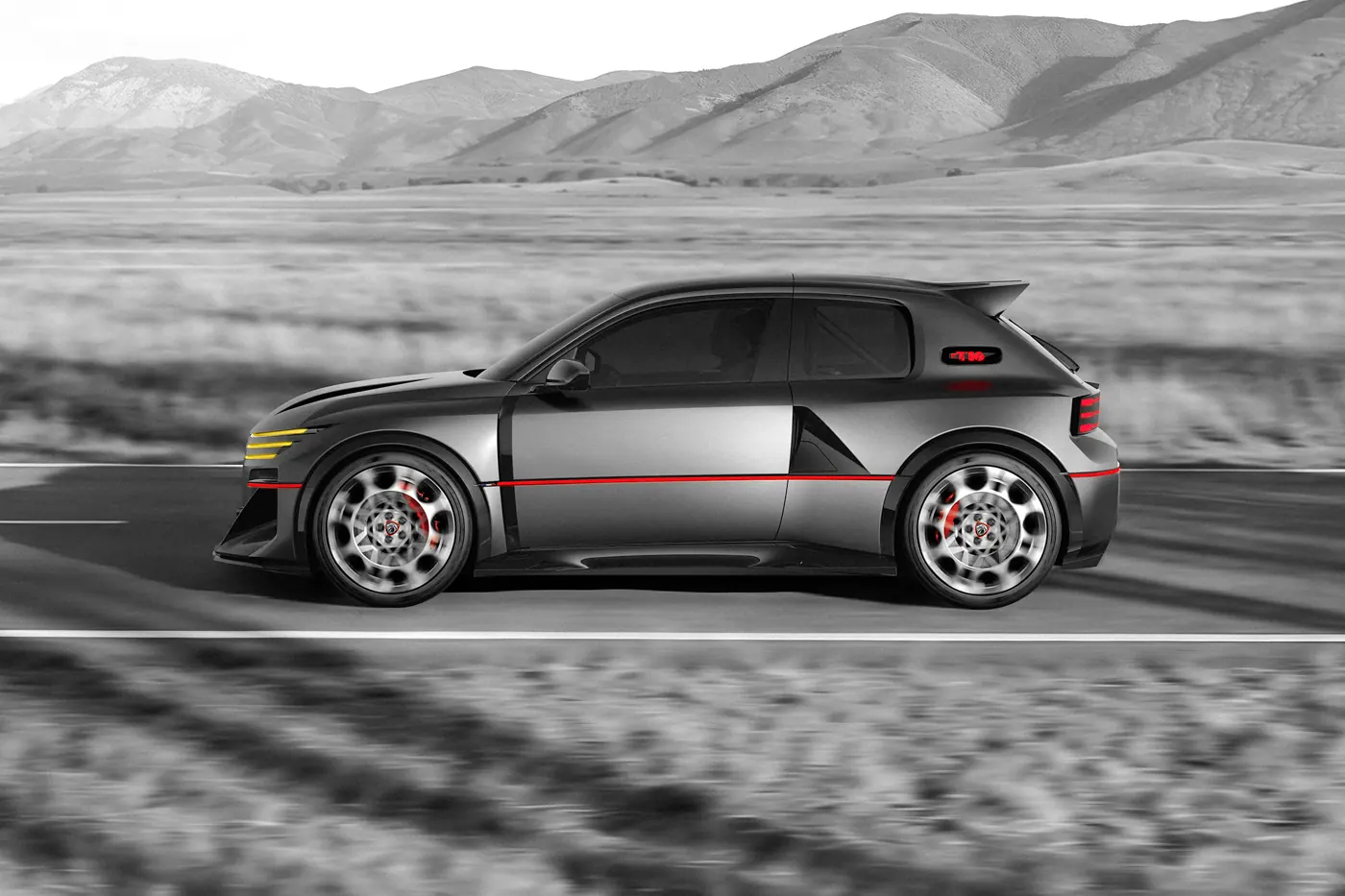
With another 269bhp – not to mention the traction advantage – it’s little surprise the E-T16’s figures are more impressive: 0–62mph in 2.5sec and 0–186mph in 16sec. Peugeot says no car in its history has made more power, although the 863bhp 208 T16 Pikes Peak prototype might beg to differ. No official kerb weight has been given, although a claimed power-to-weight ratio of less than 2kg per horsepower puts it under 1632kg.
Four driving modes alter power delivery, torque distribution and suspension settings, including a dedicated track mode and one the driver can configure. Braking comes from 380mm discs at each corner, and just like the Renault, there’s a vertically mounted hydraulic handbrake. Michelin Cup 2s measure 275mm wide at the front and 315mm at the rear.
The battery pack also reads as production-ready, comprising 85kWh of lithium nickel manganese cells on an 800V architecture. Quoted WLTP range is 248 miles and a 10–80 per cent charge takes less than 15 minutes. Aiding the Nürburgring claim is what Peugeot calls Side Cooling, which draws heat from the cells through their side walls rather than their base.
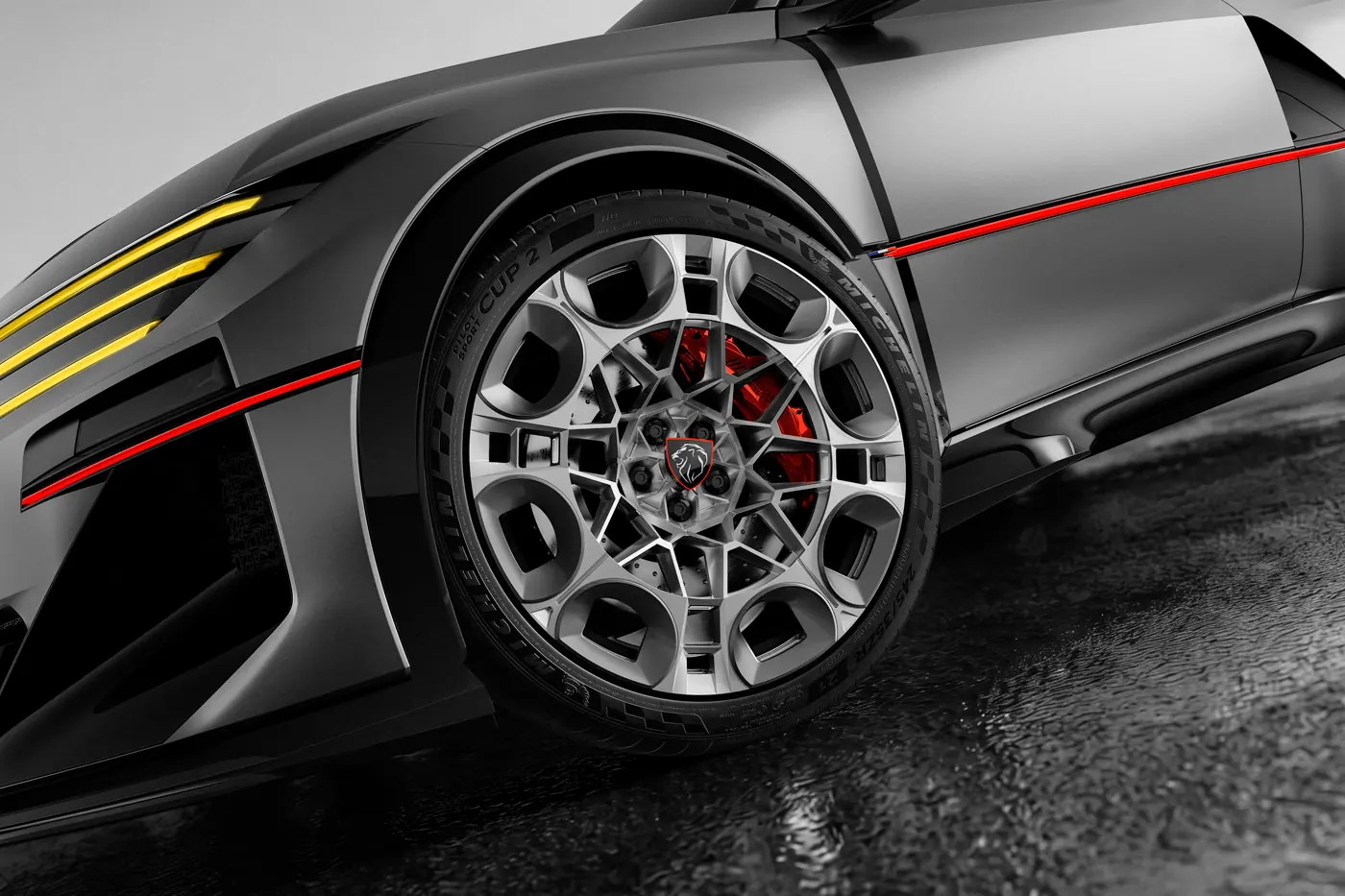
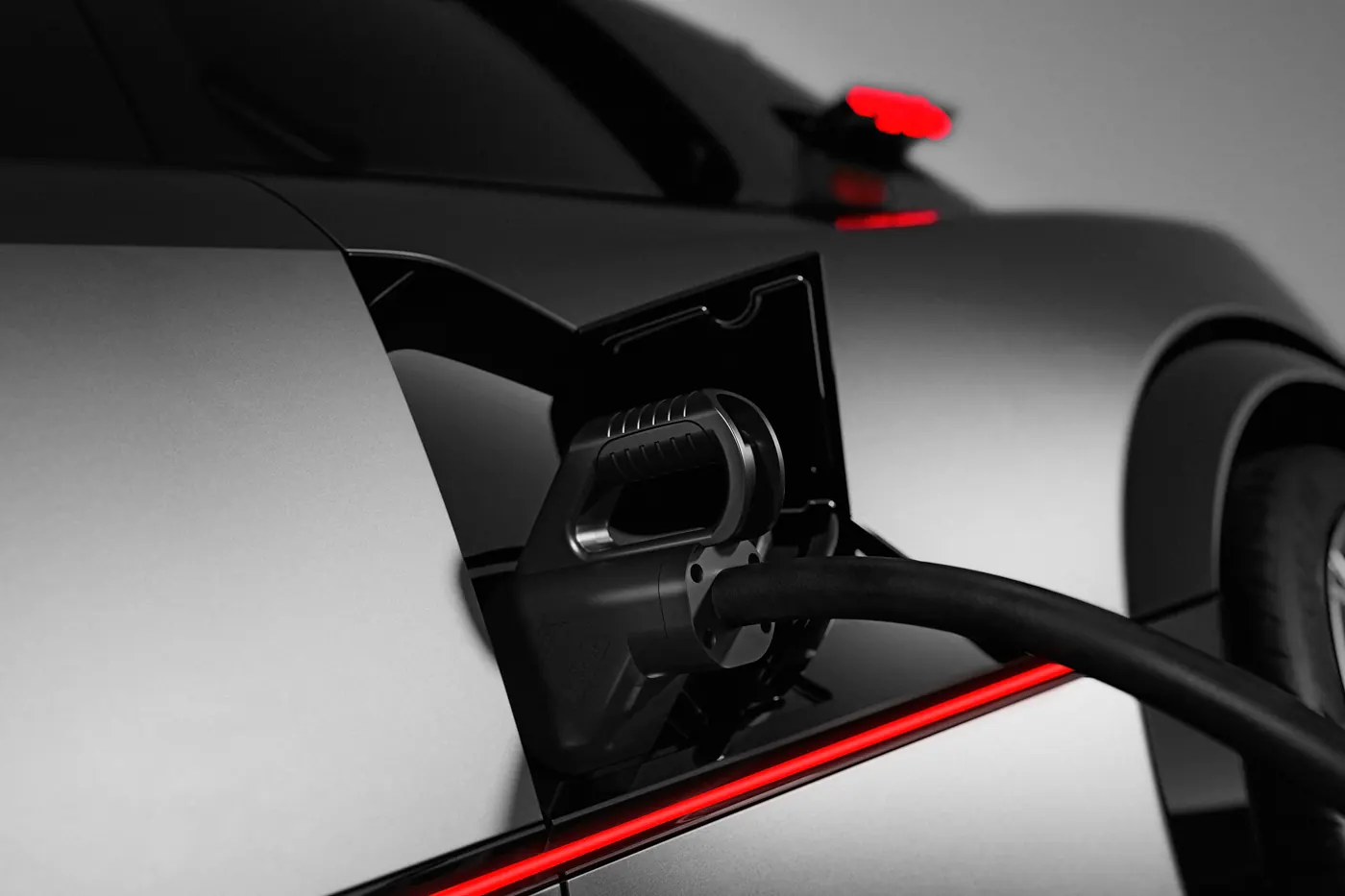
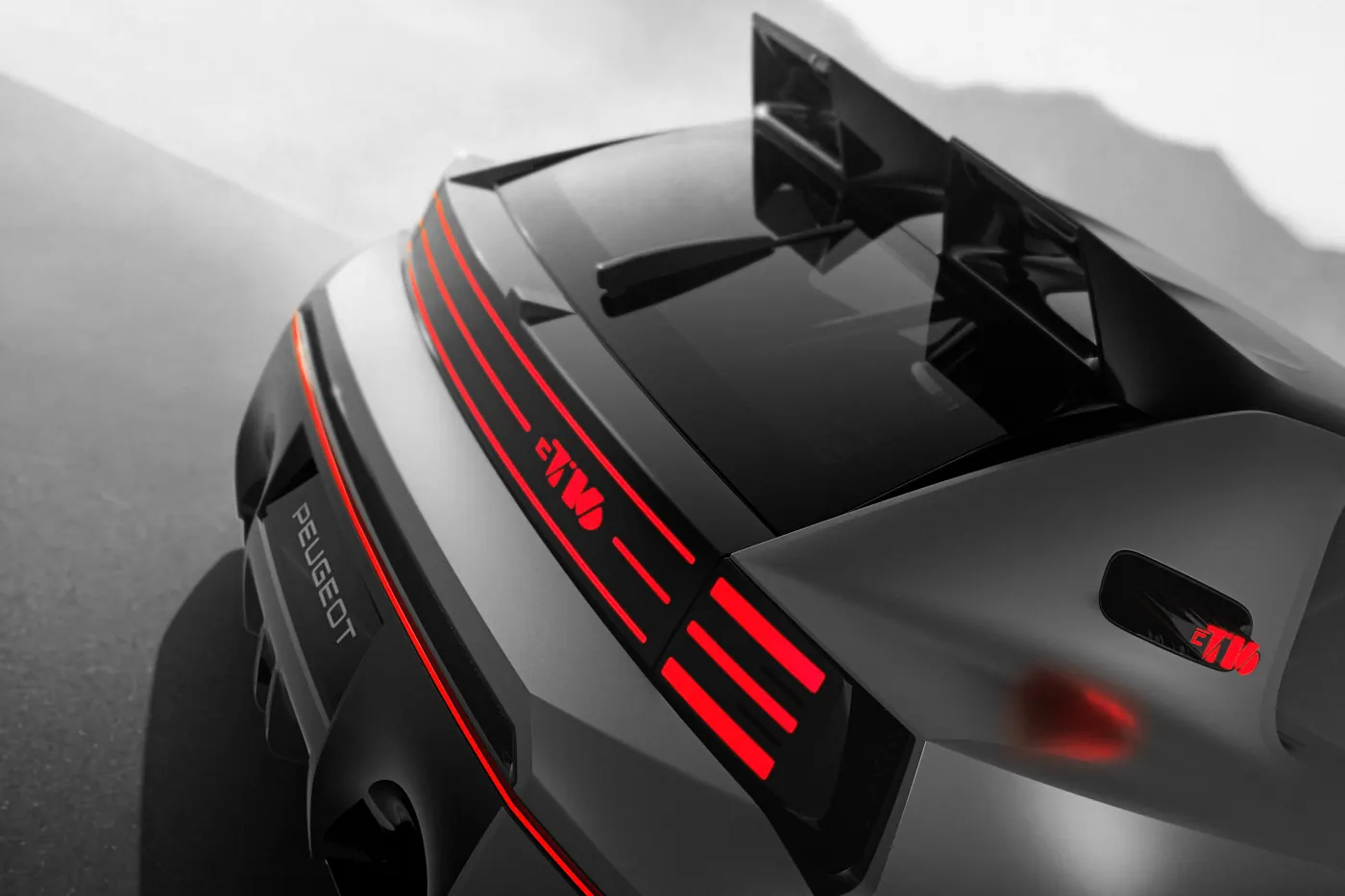
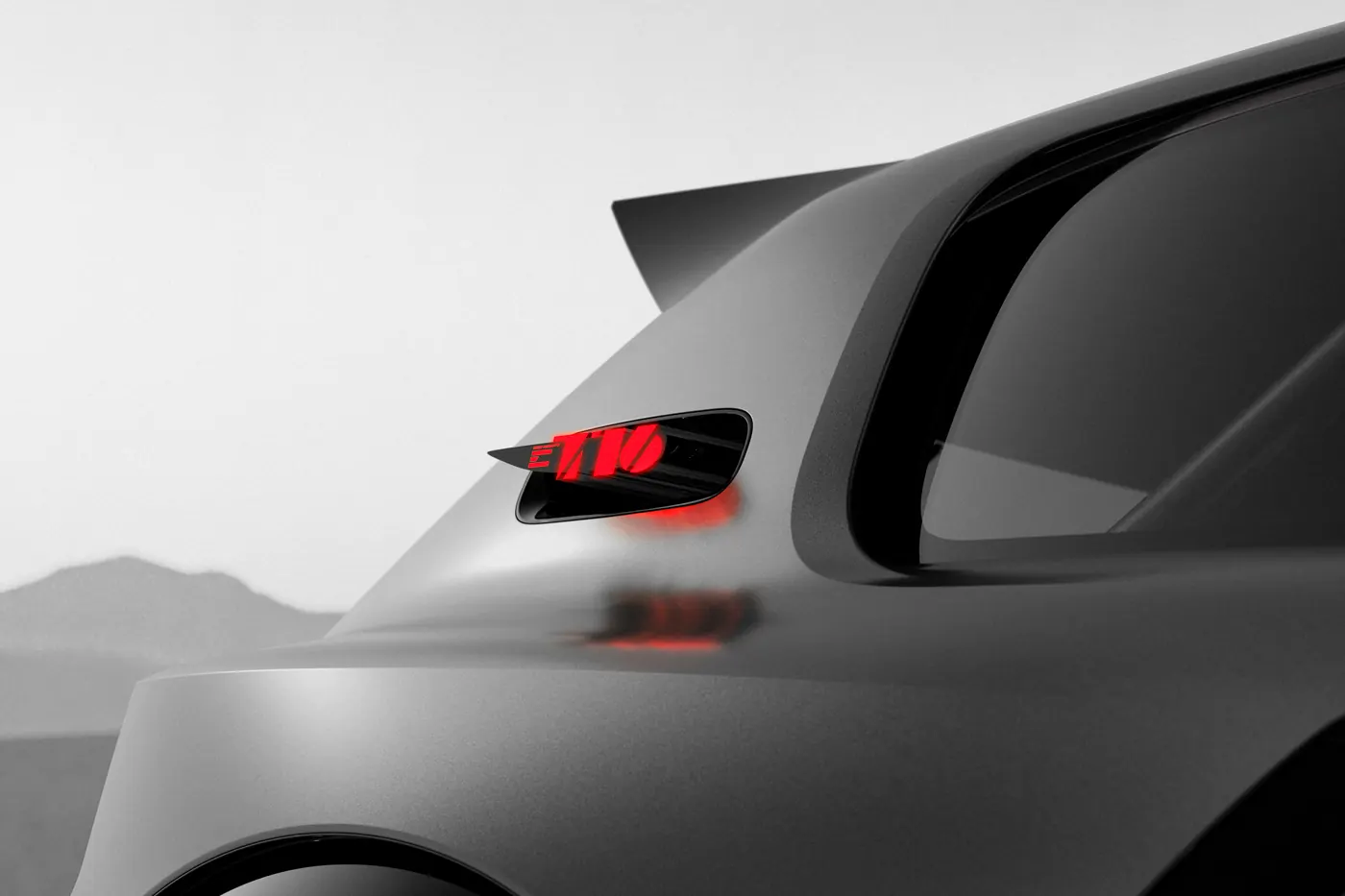
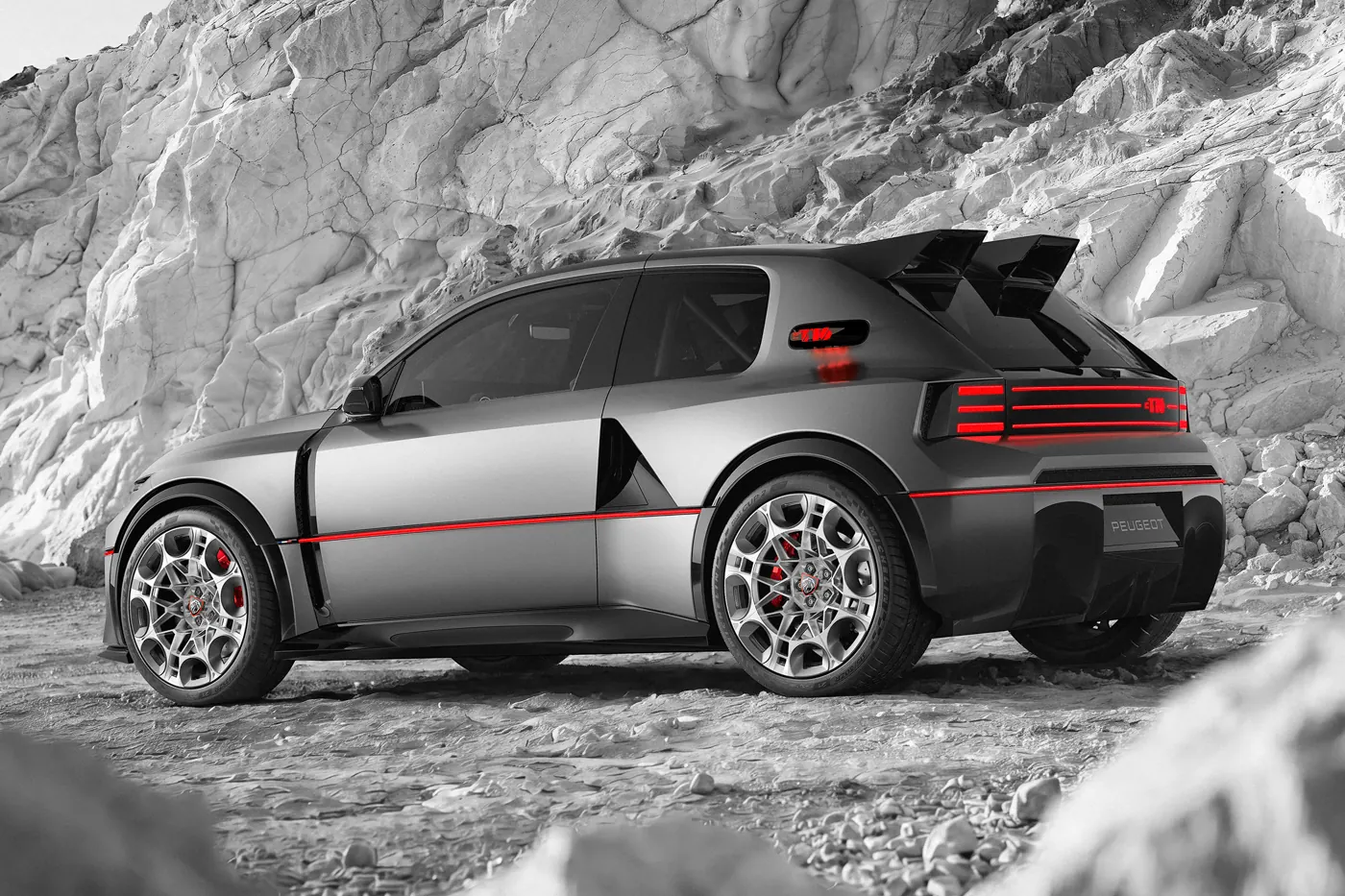
Cooling is one thing the heavily turbocharged Group B 205 T16 needed a lot of. The E-T16 honours the original’s oversized side intakes but repurposes them, with the charging port and door-opening mechanism now sitting where the engine and intercooler once drew breath. Other references include Winchester Matte Grey paint, silver wheels with body-coloured inserts, and a back-lit red pinstripe circling the car. The floating C-pillar survives too, with refined aerodynamics, and like the original, the rear of the car is a clamshell that tilts open. On display are the two inboard electric motors, suspension, roll cage and carbon fibre platform, with room left over for two helmets.
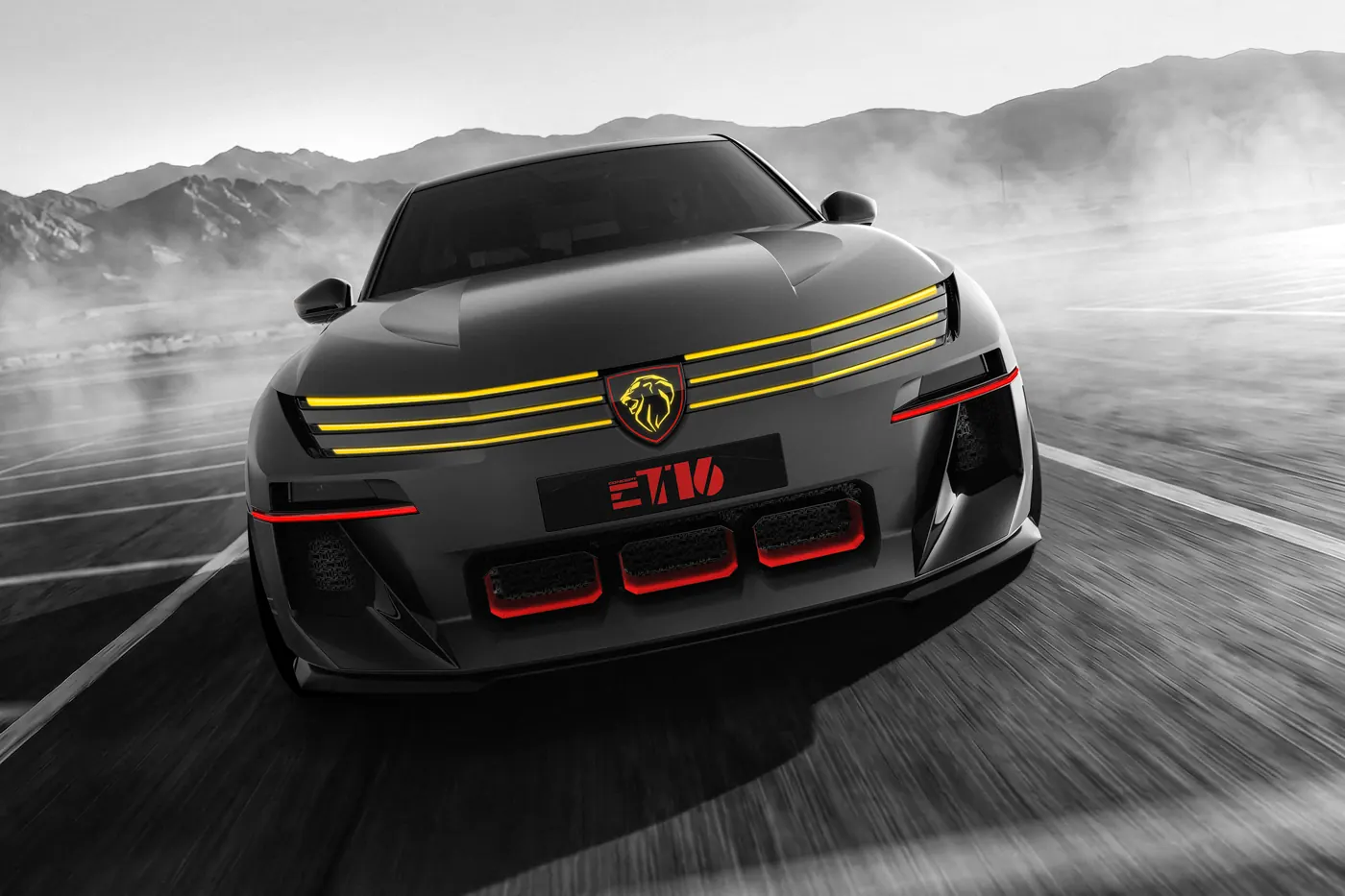
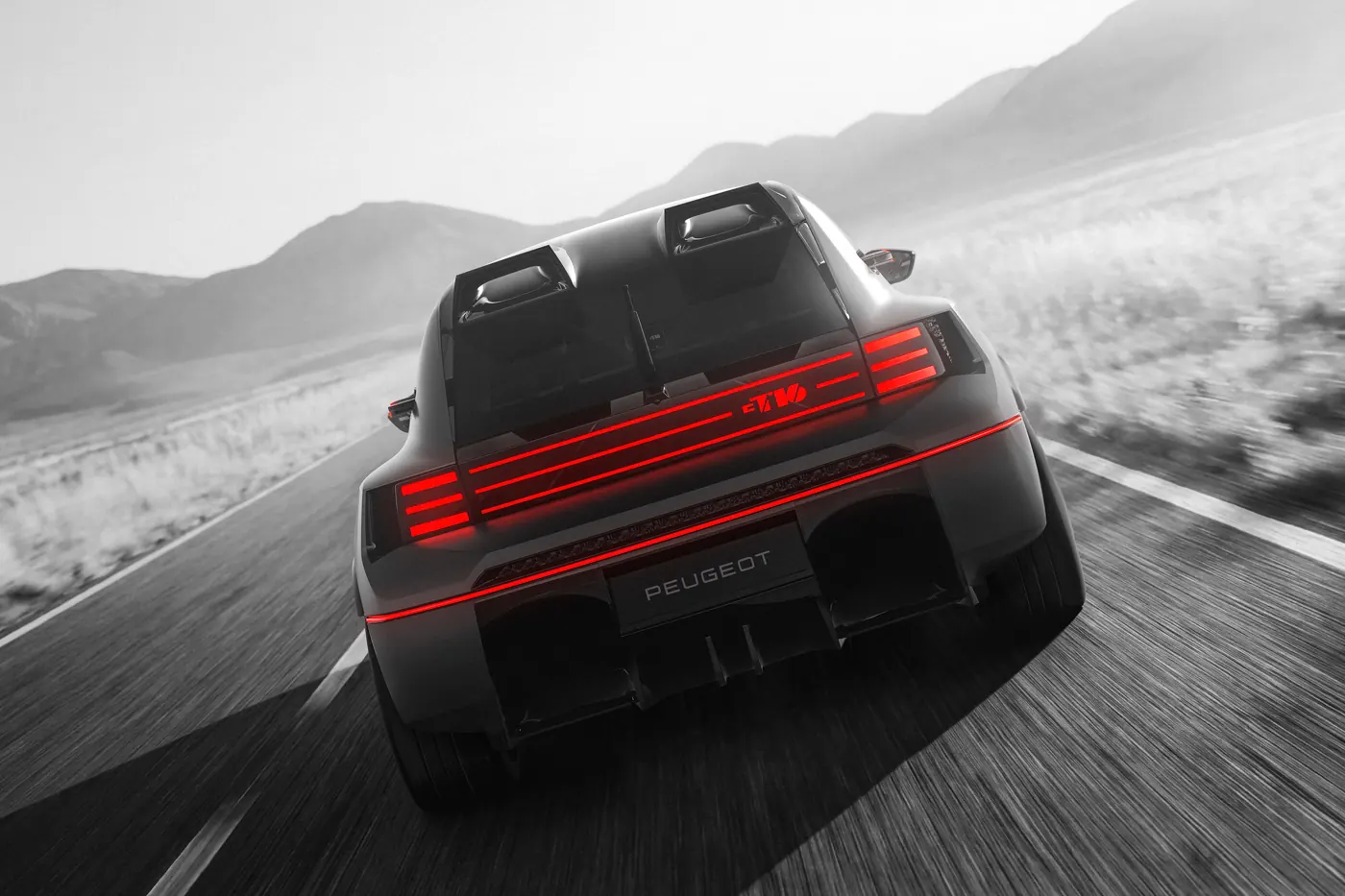
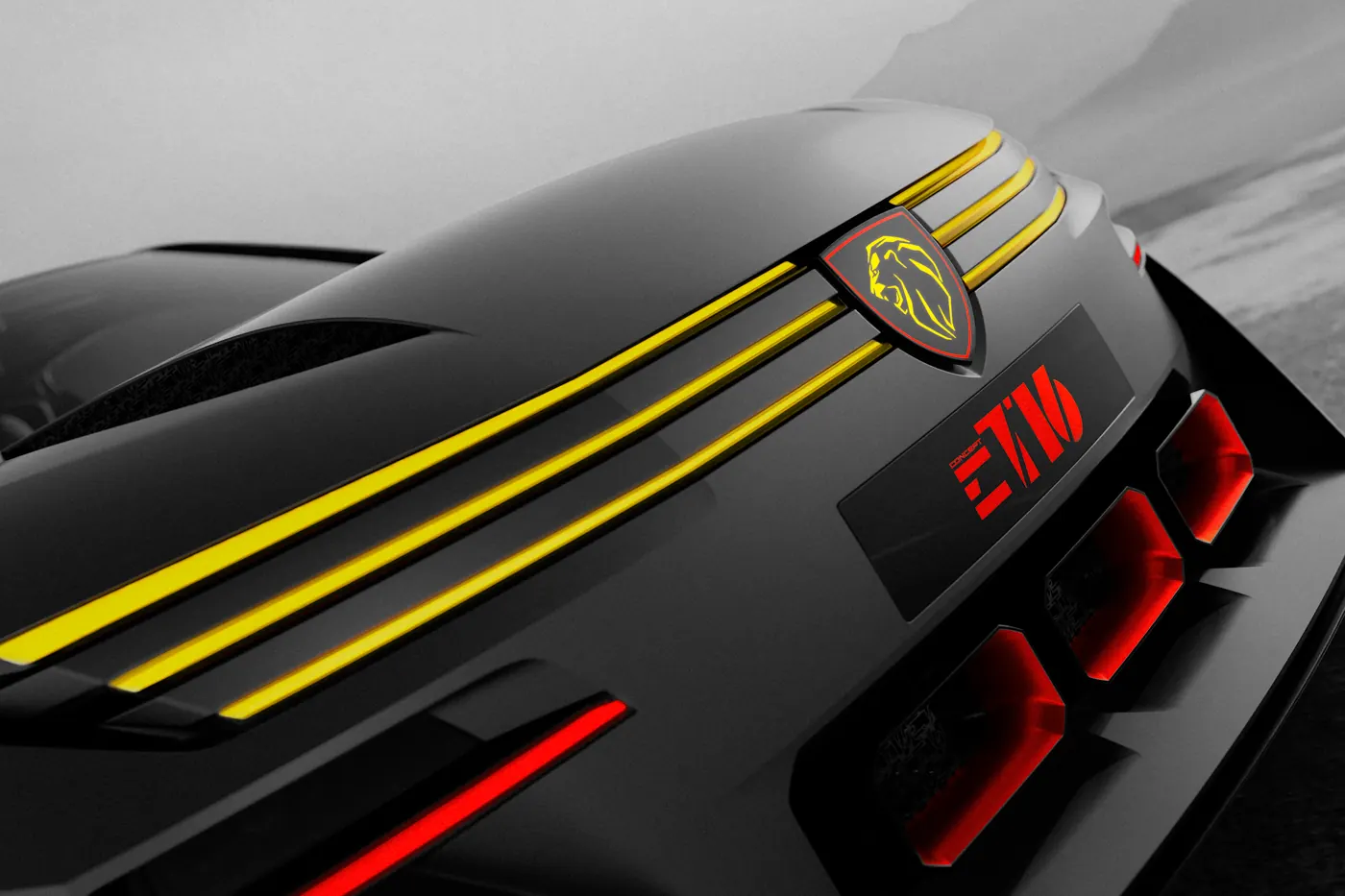
The lighting, meanwhile, looks forward rather than back. The three-claw signature turns horizontal, front and rear, with a trio of slim light bars framing an illuminated lion icon. It is part of Peugeot’s new Feline Future design language, set to debut on the next E-208.
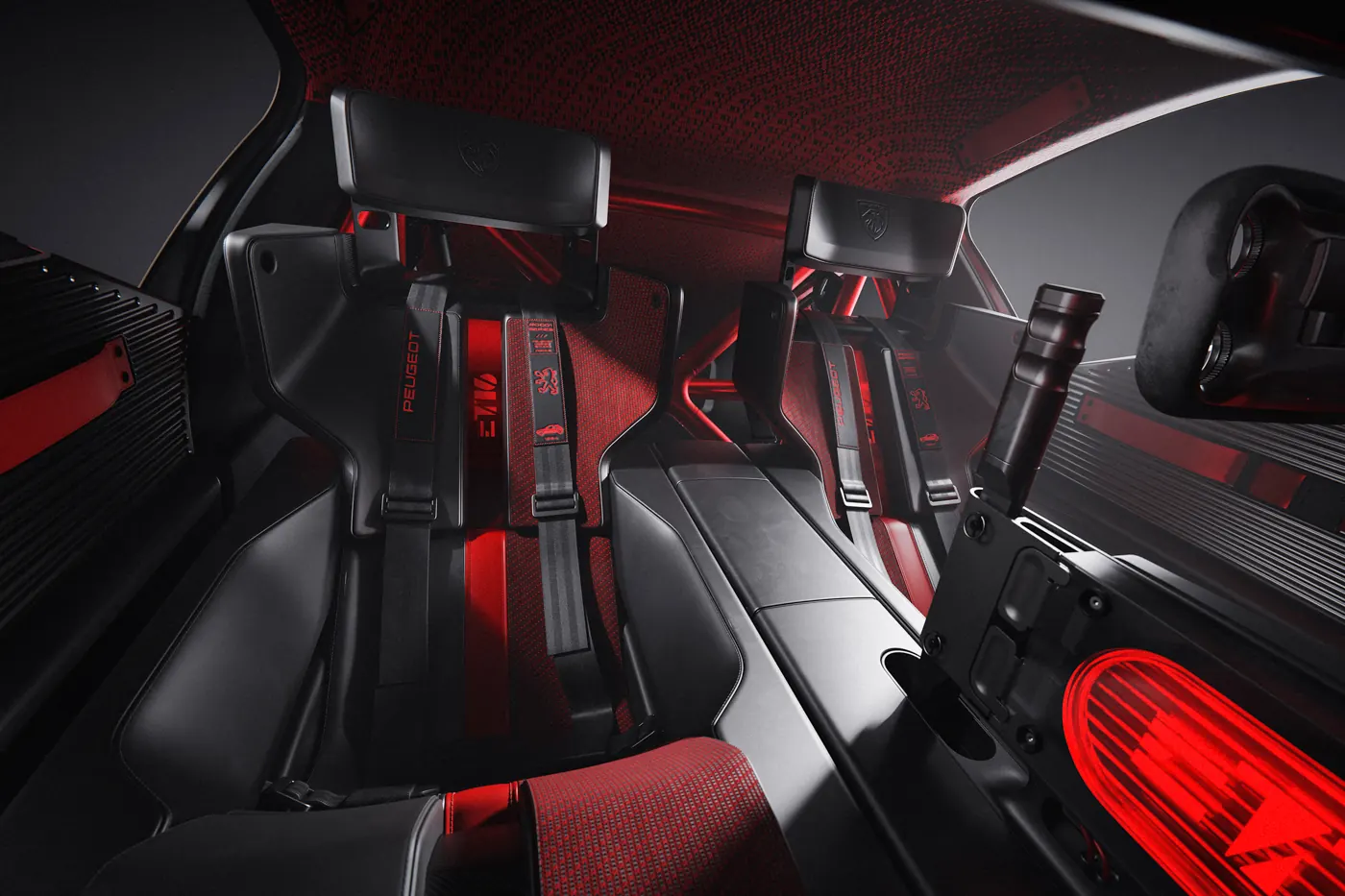
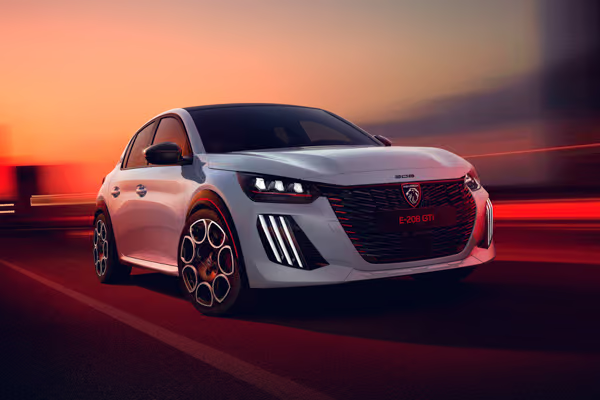
The motorsport aesthetic continues on the inside, with carbon fibre, anodised aluminium and technical mesh throughout, and carbon-shell bucket seats. Look beyond that and you’ll see further elements of the forthcoming E-208. A curved 21-inch display combines the instruments and central touchscreen, while the red mesh headlining nods to the carpet in the current E-208 GTi. Below the display sits Peugeot’s latest take on the steering wheel.
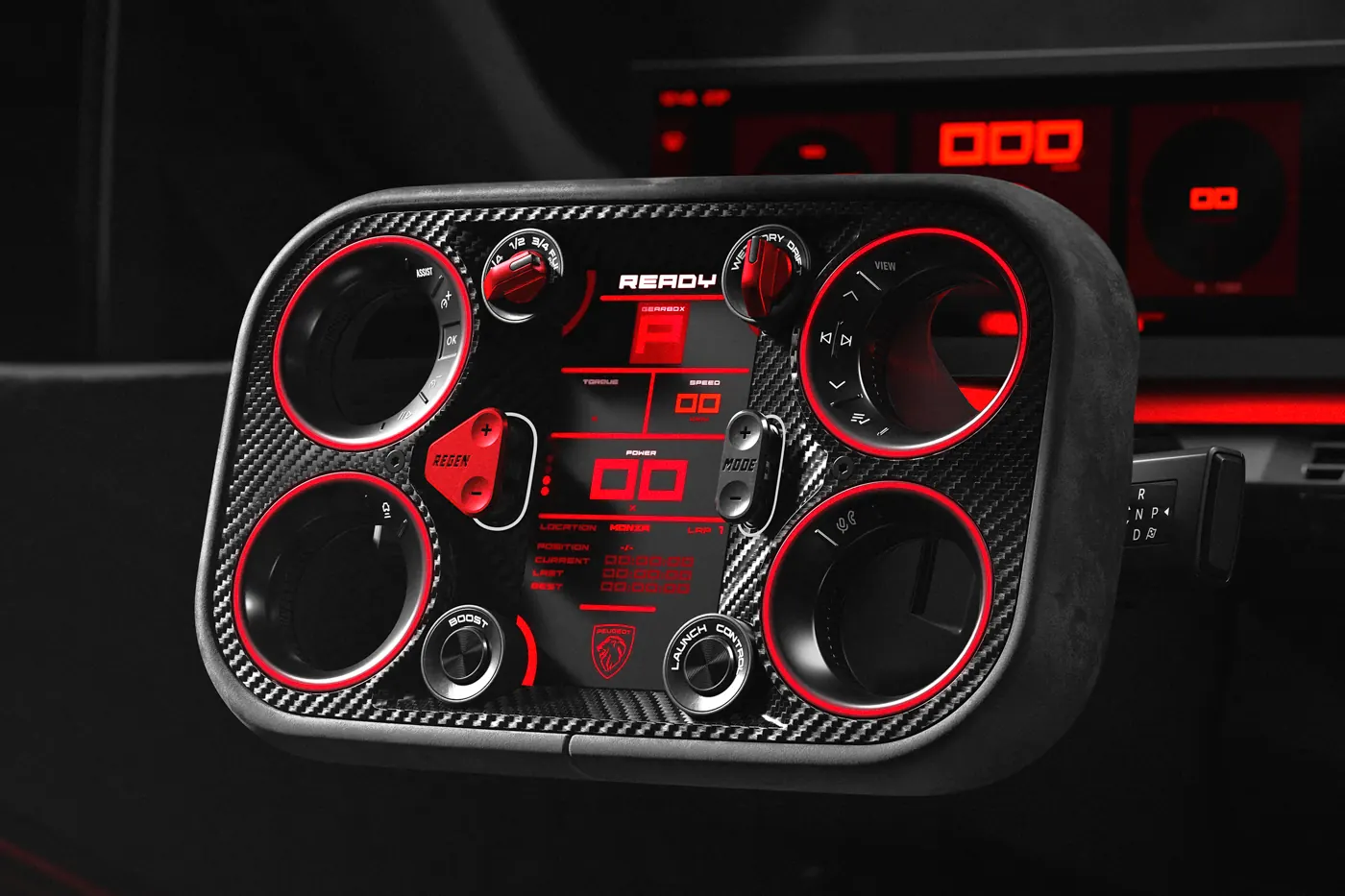
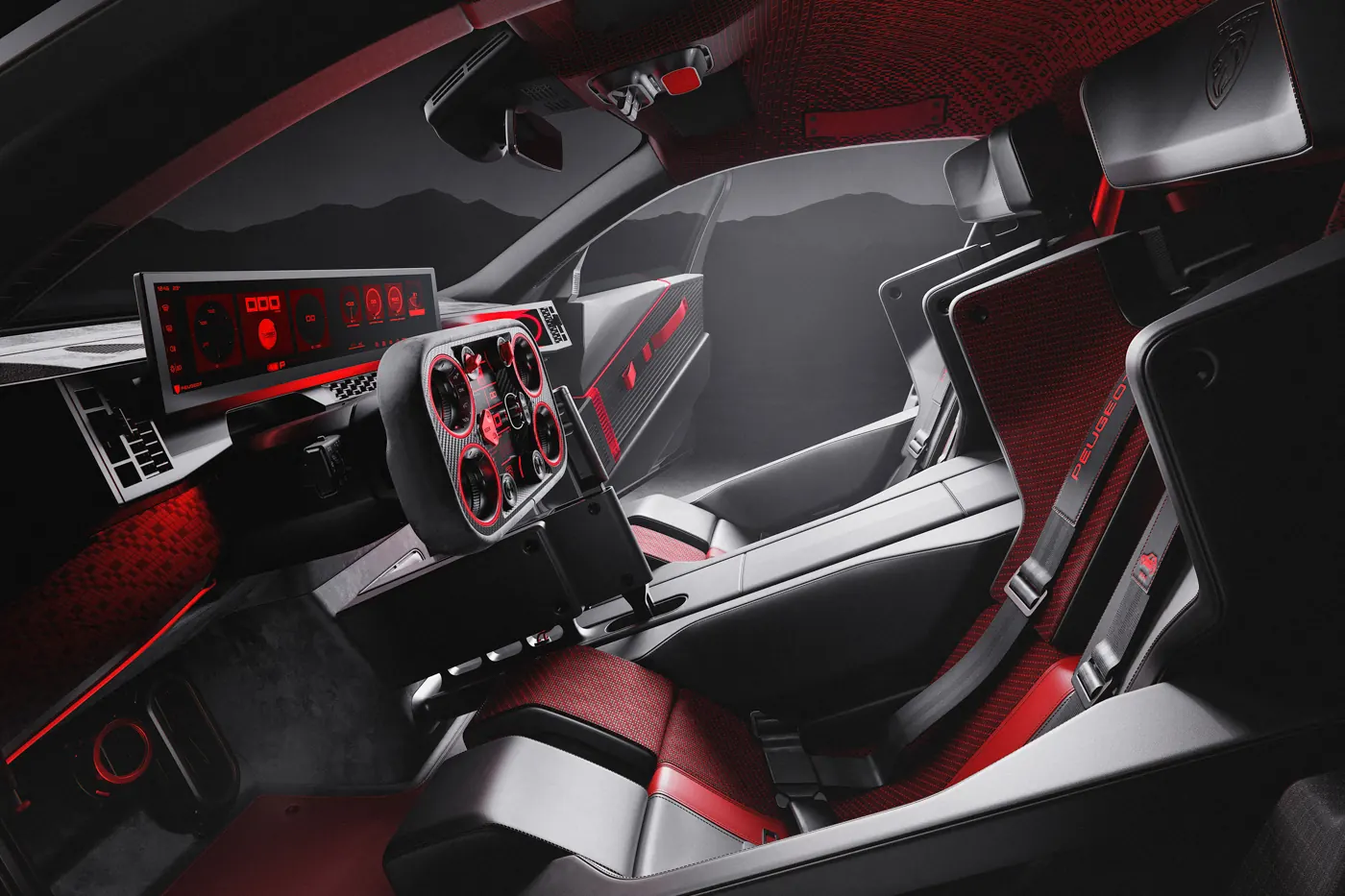
In what is fast becoming a theme of this year’s Paris Motor Show, the E-T16 also adopts steer-by-wire, joining the RCZ Vision, Renault’s E-Space and Alfa Romeo’s Cuorerosso. The system works through the ‘Hypersquare steering control’, an oblong yoke inspired by the 9X8 Le Mans Hypercar, punctuated by a distinctive ring in each corner embedded with physical buttons. Within it lie a pair of manettino-style dials – one setting power output from a quarter to full, the other switching between wet, dry and drift – alongside rocker switches for regen and drive mode. Occupying the space normally reserved for an airbag is a central display offering data logging, made possible by the fitment of four-point harnesses.
The level of detail reflects a concept closer to production than flight of fancy, and the appetite within Peugeot to build it plainly exists. Design director Matthias Hossann told Autocar: ‘If enough people are interested, we are looking to make it.’
Here’s hoping enough people are. In period, four-wheel drive left the rear-driven Renault outgunned on loose surfaces, but on tarmac it still had the edge, finishing more than 12 minutes ahead of the 205 T16 at the 1985 Tour de Corse. Build the E-T16, and Peugeot might finally be able to return the favour.



.svg)

